

The Luxury Nobody Is Selling You:
The Art of Doing Nothing in Nature
By Marcelo Meneses — CEO, Neotropic Expeditions
And yet, there is something almost nobody is selling them — something I myself took too long to understand.
The gap.
Not the gap as an absence of value. The gap as design. As intention. As the space where something happens that no activity can produce.
The Perfect Itinerary Trap
The high-end adventure travel industry has a deep fear of silence. It fills everything. Whitewater rafting at dawn, a trek by midday, an expert talk in the afternoon, a themed dinner at night. The itinerary becomes a feat of logistical engineering — and the guest flies home as exhausted as they arrived, just with better photographs.
This isn’t bad faith. It’s that filling time feels like delivering value. An “empty” day feels like a failed day. A moment without a guide feels like abandonment.
But neuroscience tells a different story.
When your mind has no specific task, it activates what researchers call the Default Mode Network. This is the brain system responsible for processing emotions, consolidating memories, generating empathy, and integrating experience. In simple terms, it’s the mode in which your brain digests what you’ve lived.
The problem is that this system only switches on when you’re not doing anything “productive.” In an expedition with a packed schedule, it never fires.
You come home with images. But not with transformation.
What the Forest Does When You Give It Space
There is a Japanese practice called Shinrin yoku literally, “forest bathing.” It is not hiking. It is not formal meditation. It is simply being in the forest, with open attention, without agenda.
Research by Dr. Qing Li and his team in Japan has documented what happens physiologically during these immersions: cortisol reduction, lower blood pressure, increased NK (natural killer) cell activity that strengthens the immune system, and measurable improvements in mood that can last for days.
No equipment required. No instruction required. What it requires is time and permission to do nothing else.
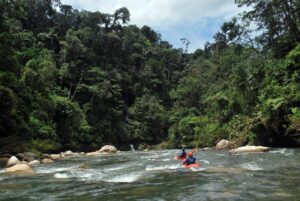
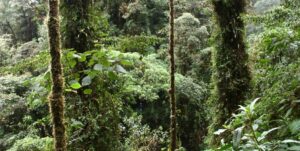
But there is something the Japanese studies don’t fully capture, something I have witnessed repeatedly on our expeditions: the moment when someone stops in front of a river, or beneath a 40-meter forest canopy, and simply… stays. No phone. No conversation. No analysis.
Researchers at UC Berkeley call this awe a specific emotional state that occurs when you encounter something that exceeds your frame of reference. Something so vast, so ancient, so indifferent to your calendar, that your ego simply becomes small.
Awe is not an aesthetic luxury. It is a neurological mechanism with real consequences: it reduces inflammatory markers, expands temporal perspective, and increases generosity and the sense of connection. It may be one of the most therapeutic states a human being can experience.
The Ecuadorian Amazon, the Ecuadorian cloud forest, the high Andean páramo these are awe-generating machines. If we give them space to work.
The Difference Between Free Time and Designed Space
Here is the distinction that took me years to understand, and that is now shaping how Neotropic builds its itineraries.
I am not talking about simply leaving a block on the schedule empty. For the modern traveler, that produces anxiety, not integration.
I am talking about designing the gap with intention.
It means arriving at a viewpoint and staying for 45 minutes without a guide. It means having a journal in your pack, not a phone. It means the guide saying explicitly: “This time is yours. There is nothing to see, nothing to learn, nothing to accomplish.” And having that written into the program not as filler, but as a centerpiece.
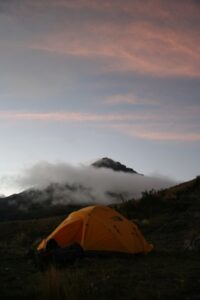
It means understanding that the river is not an obstacle or a photographic resource. It is an interlocutor. That the silence of a night in a remote Andean camp is not the absence of entertainment it is the oldest nervous system regulation protocol in existence.
Free time is improvised. Space for connection is designed.
What My Own Practice Taught Me
I am what some people call a biohacker. I experiment with longevity protocols, follow research in functional medicine, and work with precision supplementation. I have a fairly elaborate stack for optimizing my biology.
And yet, the moments of greatest clarity I have experienced in recent years have not happened in front of a red light panel or inside a cold chamber. They have happened in silence, in remote places, when I deliberately stopped “doing something to improve.”
The most powerful stack I know, sometimes, is this: silence, trees, no agenda.
No paper taught me that. Walking for three hours without a specific destination in the Ecuadorian cloud forest taught me that — phone in my pack, nobody expecting anything from me.
A New Definition of High-End Expedition
The wellness travel market is growing at rates no other tourism segment can match. But most of what gets labeled “wellness” is spa plus yoga plus green juice. It is surface-level wellbeing.
What we are building at Neotropic is different. It is architectural wellbeing itineraries where the pause is not what happens between activities, but is itself an activity. Where nature is not the backdrop, but the therapeutic agent.
Where you return changed. Not just rested.
There is a traveler who no longer wants more things to see. They want something to happen to them. Something that integrates. Something they carry home not in their camera roll, but in the way they breathe, think, and choose.
For that traveler, we are redesigning what it means to travel well. In Ecuador. In Peru. In landscapes that have been doing this work for millions of years — long before any wellness brand put a name to it.
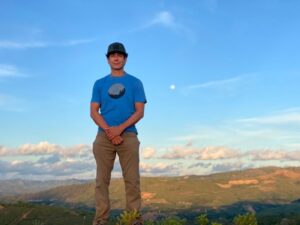
Neotropic Expeditions designs immersive journeys across Ecuador, the Galapagos, and Colombia, where intentional pacing creates space for deeper connection.
If this way of traveling resonates with you, connect with one of our Travel Designers to begin shaping your journey.